
Go Setups & Go Fast
Pro setups plus the Go Fast telemetry app. Race engineer in your pocket.
Go Setups & Go Fast discount codeGo Setups, my honest take
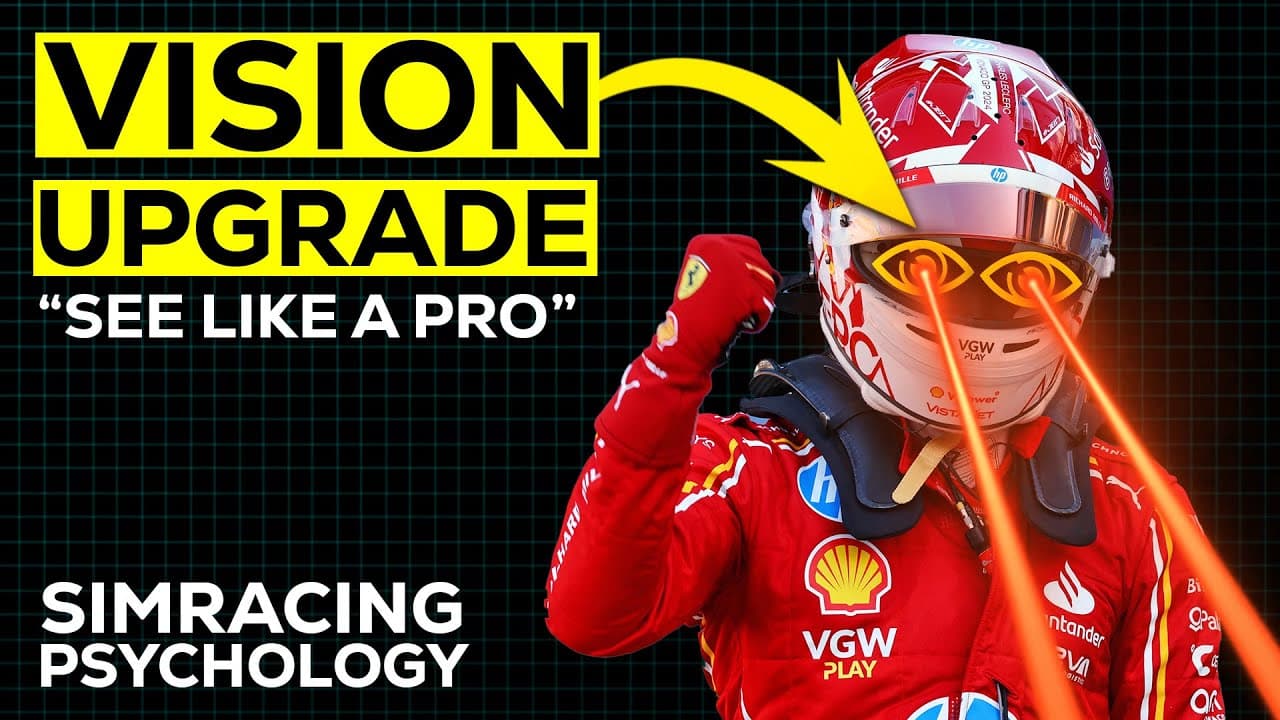
Simracing Psychology
The biggest breakthrough I've ever had in simracing wasn't a wheel, a setup, or a coach. It was turning off the delta bar. The reason is a piece of sports psychology called Quiet Eye, and once you know about it, you can't unsee how much of your lap time is decided by where you look.
Start here
This one took me ten years to properly land. Embarrassing. Once it did, my braking got more consistent, my entries got smoother, my exits got faster, and my iRating is the highest it's ever been. It wasn't talent. It was control over where I looked, and when.
The trigger was a single setting. I was glancing at the delta bar mid-corner, desperate for instant feedback on whether I was up or down on the lap. Trying to read a tenth-of-a-second number with the same fraction of the brain that was meant to be nailing the apex.
That's the worst possible time to process that kind of information. It split my attention, slowed my reactions, made me less consistent.
Turning the delta bar off was the moment everything changed. The reason is a piece of sports psychology called Quiet Eye.
One setting, two laps
Delta bar on
Glance at delta. Brake. Apex. Was that up or down? Glance again. Miss exit. Repeat.
Delta bar off
Brake marker. Turn-in. Apex. Exit. Repeat. Calm.
Same car. Same setup. Same pace target. Completely different relationship with the corner.
The science bit
Sports scientists studying elite performers across very different disciplines noticed the same thing in all of them. A common pattern, right before the moment that matters.
In the final second before a critical movement, every elite performer does the same thing. They lock their gaze on one exact spot. No darting eyes. No scanning around. No glancing at distractions. A still, fixed gaze on the one visual cue that matters most for the action they're about to take.
That final quiet gaze gives the brain time to process exactly what's coming and prepare the body to react with precision. The hands, feet, body weight, everything follows the eyes.
The discipline changes. The cue changes. The mechanism doesn't.
Same pattern, different sports
Discipline changes. Cue changes. The mechanism is the same everywhere it's been studied.
The opposite problem
Especially under pressure. Hand up, I was guilty of this for years. In the same second before action, most drivers flick between three, four, five things on the screen. The mirror. The relative. The delta. The marker. The apex.
Your brain physically cannot prioritise all of that at once. It's like typing an important message while switching between three keyboards. Slower, less accurate, less confident on every input.
Pressure is the multiplier. The bigger the moment, the more your eye wants to dart around. Which is exactly when you can least afford it to.
One second, five demands
Five visual targets, one second, one brain. Something gives. Usually it's the apex.
In the cockpit
One corner, four deliberate gaze shifts. Each one happens earlier than feels natural. That earliness is the entire point.
Final second before the brake zone.
Identify your marker well before you arrive. A 100 board, the start of a kerb, a specific crack on the track surface, a paint stripe. Lock your gaze on it for the final second before braking. Peripheral vision still tracks your mirrors and the cars around you, but your main attention is fixed.
Common mistake
Glancing at the delta bar in the final second before brakes. It's the worst possible moment to process that information.
As you release peak brake pressure.
Don't stay locked on the marker after you've started braking. Move your gaze, smoothly, to the turn-in point as you trail off the pedal. Peripheral vision keeps the braking reference in view, your main focus is already onto the next job.
Common mistake
Staying on the brake marker too long. You'll turn in late, miss the radius, and lose a tenth on entry.
Before you start turning in.
Before you actually start rotating the wheel, your eyes should already be on the apex. Hands and feet follow the eyes. Lock the apex, commit, and the inputs naturally arrive in the right place at the right time.
Common mistake
Delaying the shift. You'll either clip the kerb too early, or miss it entirely and run wide. Both cost you exit.
Roughly halfway through the corner.
Pull your gaze to the exit, ideally the end of the kerb or a marker on the outside edge. Peripheral vision confirms you've hit the apex and that nobody's diving up the inside. Eyes on the exit tells your brain when to unwind the wheel and feed in the power without hesitation.
Common mistake
Eyes stuck on the apex while you're already past it. The car ends up unwinding late, traction comes in late, the next straight is slower than it should be.
Peripheral vision is doing more work than you think. Mirrors, opponents, kerbs, all still register. Your main attention is the only thing you're moving. One cue at a time, ahead of where the car actually is. Eyes lead, hands follow.
Why it works
Quiet Eye isn't magic. It's neuroscience.
Your eyes feed your brain the data it needs to predict what happens next. The steadier and earlier that data arrives, the faster and cleaner your response. A still gaze on a clear cue gives the brain a full second of clean input. A flicking gaze gives it a fragmented slideshow.
Predictions built on clean input come in on time. Your braking arrives at the right point with the right pressure. Your turn-in lands on the radius you wanted. Your exit unwinds at the moment the car is ready for it.
Same hands, same wheel, same car, same setup. The only thing that changes is what you're looking at and when. The improvement is huge, and almost everyone who's never heard of this is leaving it on the table.
Training plan
You don't need a coach or a course or to go study sports psychology. You need three small habits.
Drill 01
One corner, every lap, four shifts
Pick one corner you know well. Run laps where you walk through the four gaze shifts in order. Brake marker, turn-in, apex, exit. Out loud if you have to. Give it a few sessions and the sequence starts running on its own, and you can stop saying it.
Drill 02
Cockpit cam, minimal HUD
Switch to cockpit camera. Turn off any overlay that isn't strictly needed to drive the car. Delta bar, fancy info bars, even the relative if you can spare it. Pure cockpit view with one clean field of vision teaches your eye to find natural reference points.
Drill 03
Mirrors only on the straight
In races, only check mirrors at one or two set points on the straight. Never mid-corner. The second your main focus leaves the cue your eyes have committed to, the corner gets slower. Make this a rule, not a vibe.
In a race the urge to glance at the mirror mid-corner is real. Resist it. Mirrors get checked at set points on the straight, never during the actual moment a corner is being driven. If a car needs tracking, that's a peripheral-vision job, not a main-focus one.
For the delta bar specifically, you've got two choices. Turn it off entirely, like I did, or move it to a spot you can only see clearly when your eyes are not in their racing position. Either works. The point is to stop it pulling your gaze in the second that matters.
The bit that lasts
In psychotherapy, that's how we describe it. Awareness isn't just the first step, it's the moment the thing actually becomes changeable. You can't adjust a pattern you've never noticed.
Quiet Eye is the same idea, applied to a corner. Once you've seen what your eyes have been doing under pressure, you can never quite unsee it. From then on, every lap is a small choice about where you look.
The more intentional you are with your focus, the more control you have over your results. Master that and you won't just be faster. You'll be calmer, more confident, and far more ready when the pressure is on.
Every lap, in order
Choose where you look. The rest of the corner sorts itself out.
A note on Simracing Psychology
Quiet Eye is one pattern. There are plenty more. Why your leg shakes when the pressure is on. The lie every simracer believes about iRating. Why overthinking quietly makes you slower. All documented, all very trainable, all in the same place.
Simracing Psychology is where I keep all of this, videos and articles both.
Eyes lead. Hands follow. The wheel goes where you were already looking a second ago.
Same car, same setup. The only thing that changed was what I was looking at, and when.
Keep going
Everything below is something I've made, used, or written. Affiliate links are marked the same way they are everywhere else on the site.
Related guides
Simracing Psychology
The flagship page. Manifesto, videos, articles. Where the rest of this thinking lives.
ReadWhy your leg shakes
The pressure response, somatic anxiety, and the four steps to channel it. Pairs naturally with this one.
ReadThe Lie Every Simracer Believes
The arrival fallacy, the iRating chase, and why the satisfaction you're waiting for never quite arrives.
ReadGear that matters here
Pro setups plus the Go Fast telemetry app. Race engineer in your pocket.
Go Setups & Go Fast discount codeGo Setups, my honest take
Based out of Drift Games HQ in Ireland. Consultation, planning, building and setup of advanced simracing rigs for private and commercial clients.

The SIMAGIC starter bundle deal. Direct-drive base, wheel and pedals, a permanent $599.
SIMAGIC discount codeThe SIMAGIC lineup, explained
From the GT1 EVO to motion-ready P1-X frames, Sim-Lab kit handles whatever a direct-drive base throws at it.
Sim-Lab discount codeThe Sim-Lab rig I race onWatch the video version
All videos on YouTubeThe Pro Vision Secret You've Never Heard About
The Simracing Psychology video this article was built from.
The Irish Pub would love to have you, we have league races on Thursdays and the craic is mighty. Can't wait to see you there.
Written by
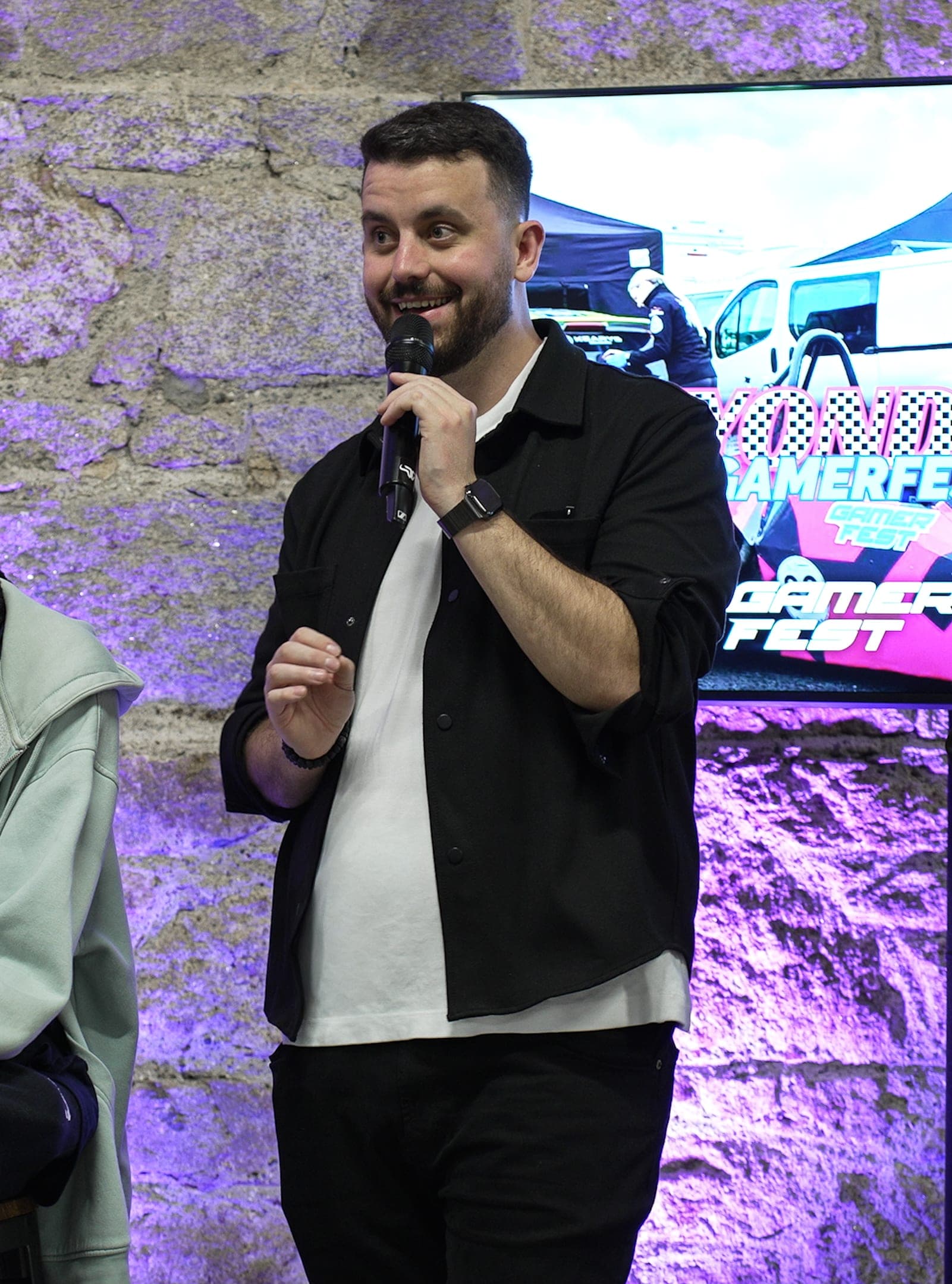
Irish simracing content creator and SIMAGIC ambassador
I'm Jack. I race, I make videos about it, and I've spent years in the simracing community watching the hardware market grow up around it. Before any of this I was an electrician, so I've always been a tinkerer. I like taking a product apart in my head and asking how it could look better, work better, or just make more sense.
I also studied psychotherapy, which helps me understand what's going on in my own head when I drive, and sometimes helps me explain it in a way that's useful to you too.
Published
Channel partners